
Search
CLOSE19:00 EET
French School in Athens & Online
6 Didotou str.
Organised by
The Institute of Historical Research of the NHRF, the Department of History and Archaeology of the National Kapodistrian University of Athens and the École Française d’Athènes
Η λατρεία της Δήμητρας ως Καρποφόρου.
Η θρησκεία στην υπηρεσία της πολιτικής προπαγάνδας
Δρ. Σταυρούλα Ασημακοπούλου, Αρχαιολόγος, Eφορεία Αρχαιοτήτων της Πόλεως των Αθηνών
The lecture will be delivered in Greek.
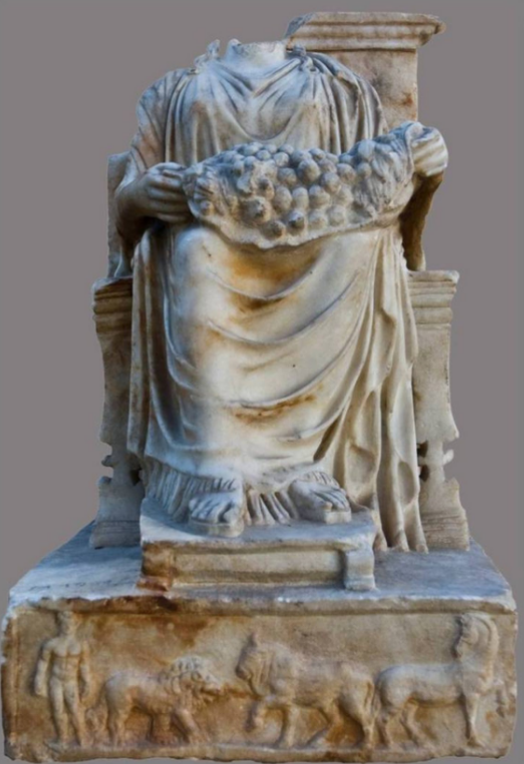
Demeter in Greece is identified with Ge (the goddess of the Earth), who determines / controls the cycle of the seasons, resulting in abundant crops and prosperity for the people. Its connection to the «euphoria» of the earth is mainly expressed with the adjectives: “Karpophoros”, “Eukarpos”, “Polykarpos”. In addition, it evolves into a goddess who promises the post-mortem bliss for the initiates in her secret rituals.
The oldest surviving testimony of the cult of Demeter Karpophoros, an inscription, which was found on the Acropolis of Athens, near the Erechtheion, dates back to the 4th century B.C.
Demeter, as Karpophoros, as Ge-Mother who gives the fruits, is related to the cultivation of the earth and generally to rural life and was related to the Ge Kourotrophos or Karpophoros.
During late antiquity, the Demeter Karpophoros worship suggests the efforts of the Emperors, from / since the time of Augustus to give new impetus to the old cults, to strengthen the bonds of the Athenians with their traditions and to underline the harmonious cohabitation with the habits of the new ruling class. At the same time, it demonstrates the «valorisation» of religion as a means of propaganda, so that the Roman emperor can be displayed as the only patron of the bliss of his own citizens.
19:00 EET
French School in Athens & Online
6 Didotou str.
Organised by
The Institute of Historical Research of the NHRF, the Department of History and Archaeology of the National Kapodistrian University of Athens and the École Française d’Athènes