
Search
CLOSEThe research projects of the Section of Neohellenic Research (SNR) focus on the political, social, economic, and cultural history of Modern Hellenism (15th-21st centuries) within the broader Balkan, European, and Mediterranean context. The diverse programs of the SNR reflect the established tradition of its researchers, but also attempt new approaches with new methodological tools. Since 2025, they have been integrated into five broad scientific clusters, which cover the entire spectrum of contemporary historical research and serve as common points of reference for both the Institute as a whole and the TNE.
Newsroom
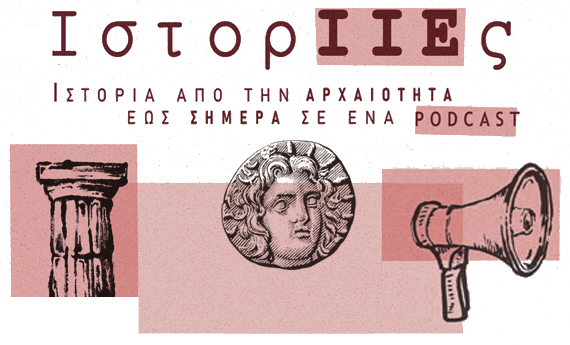
In this podcast, Kostas Tampakis, Senior Researcher in the Institute of Historical Research, talks about the relationship between the development of Natural Sciences and the historical context of the Cold War. How and why did the science of seismology and oceanography develop? Why did the Americans send men to the Moon? Why did Gagarin say “I went to space but I did not see God”? How is the teaching of Physics at schools in Greece related to NATO choices? Why was the Research Institute Demokritos founded in Greece? Is GPS part of a Cold War policy?
«Les trois langages de l’universel : Les Lumières face au monde»
Prof. Antoine Lilti, Collège de France, Histoire des Lumières, XVIIIe – XXIe siècle
March 27, 2026
19:00
École française d’Athènes
In this podcast, Elias Kolovos, Director of Research in the Institute of Historical Research, talks about Evliya Çelebi, the famous Ottoman explorer. When did Evliya live? What was his account of his travels? What does he describe when he visits the Greek mainland? How does he describe the Parthenon? Was classical antiquity important for Evliya? Why does he describe the monument of Winds as “Plato’s çadır”? Why does he describe the siege of Chandax (modern Herakleion) as a “mine of dead bodies”? Does he record the oldest words of the Tsakonian dialect? What was his relationship with his beautiful slave? How does he fund his travels?
In this podcast, Maria Christina Chatziioannou, Research Director Emerita of the Institute of Historical Research, talks about the history of Karytaina, a small mountainous community in Arcadia. Why do European travellers visit Karytaina during the 19th century? What was the strategic importance of the settlement and the castle? What do the inhabitants do for a living? What can archival research tell us about the history of the settlement and its people? Why do the inhabitants of Karytaina emigrate to Athens? What is the role of the millinery factory Pil Poul?
Clusters
Click on a cluster for more details
Events
«Les trois langages de l’universel : Les Lumières face au monde»
Prof. Antoine Lilti, Collège de France, Histoire des Lumières, XVIIIe – XXIe siècle
19:00
École française d’Athènes
«Les trois langages de l’universel : Les Lumières face au monde»
Prof. Antoine Lilti, Collège de France, Histoire des Lumières, XVIIIe – XXIe siècle
19:00
École française d’Athènes
Muhabbet is an initiative aiming at bringing together scholars, students, and people interested in the shared social history and cultural heritage of the East Mediterranean. We wish to hold discussions about our common legacies in an informal and friendly environment, like that of the coffeehouses, which originated in the Ottoman East Mediterranean, where people used to come together to develop amicable conversations called muhabbet.
The initiative is endorsed by the Demos Center, the Institute of Hellenic Culture and Liberal Arts, ACG; the Gennadius Library of the American School of Classical Studies at Athens and the Institute of Historical Research of the National Hellenic Research Foundation.
Muhabbet is an initiative aiming at bringing together scholars, students, and people interested in the shared social history and cultural heritage of the East Mediterranean. We wish to hold discussions about our common legacies in an informal and friendly environment, like that of the coffeehouses, which originated in the Ottoman East Mediterranean, where people used to come together to develop amicable conversations called muhabbet.
The initiative is endorsed by the Demos Center, the Institute of Hellenic Culture and Liberal Arts, ACG; the Gennadius Library of the American School of Classical Studies at Athens and the Institute of Historical Research of the National Hellenic Research Foundation.
Recent publications
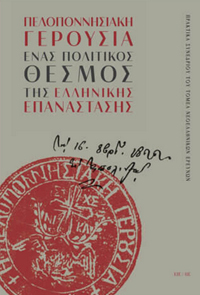
Peloponnesian Senate: A political institution of the Greek Revolution
Conference Proceedings, Tripoli and Stadio Tegeas, 6-8 November 2020
Edited by: Dimitris Dimitropoulos, Vassilis Panayotopoulos, Maria Christina Chatziioannou
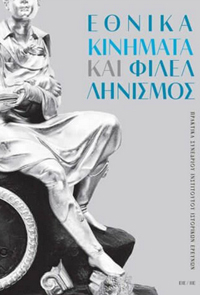
Nationalist Movements and Philhellenism
Proceedings of the International Conference, 4-6 February 2021
Edited by: Sophia Matthaiou, Alexandra Sfoini, Maria Christina Chatziioannou
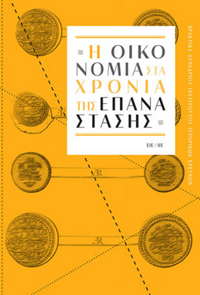
The economy in the years of the Revolution
Proceedings of International Conference, 1-2 October 2021
Edited by: Dimitris Dimitropoulos, Maria Christina Chatziioannou
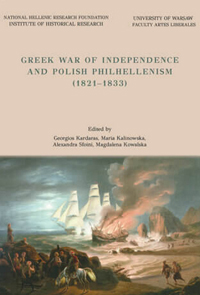
Edited by: Georgios Kardaras, Maria Kalinowska, Alexandra Sfoini, Magdalena Kowalska
100 χρόνια Ελληνικό Ινστιτούτο Παστέρ 1920-2020
Ένας αιώνας προσφοράς στη Δημόσια Υγεία και τη Βιοϊατρική Έρευνα
Ανδρέας Βούρτσης, Ελένη Έρση Μπάκου, Δρ. Ευθύμιος Νικολαΐδης
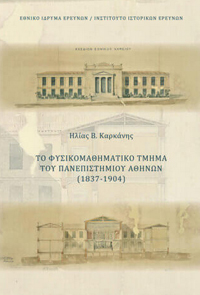
Ηλίας Β. Καρκάνης