Search
CLOSEThe research projects of the Section of Greek and Roman Antiquity (SGRA) cover numerous aspects of the history of the Greek world and the regions where Hellenism was active in antiquity, from prehistoric times up to the end of the ancient world in the 7th century AD, according to prevailing historical convention. The Section is always at the forefront of international historical research, engaging in dialogue and collaboration with institutions from around the world, and staying up to date with the achievements, trends, and new methodologies that are constantly enriching the historian’s toolkit.
From 2025, the numerous – both old and new – research projects of the Section are organized into five broad research areas. These hubs, on the one hand, cover the full spectrum of current historical research, and on the other hand, serve both as common points of reference for the Institute as a whole and as a connective tissue for the research in the Section in particular.
Newsroom
In this podcast, Luigi Lafasciano, Marie Sklodowska-Curie post-doctoral researcher in the Institute of Historical Research, talks about the cult of Asclepius during the classical period.
Who was Asclepius and why did he receive cult? How did the ancient Greeks offer cult to Asclepius? What was the practice of enkoimesis, and what was its therapeutic function? Why are there theaters within the sanctuaries of Asclepius, as is the case of Epidaurus?
In this podcast, Xanthi Argyri, underwater archaeologist and research associate of the Institute of Historical Research, talks about underwater archaeology in the region of Kasos and Karpathos in south-eastern Aegean. What is underwater archaeology? What are the finds in the region? What can shipwrecks and other finds tell us about the maritime traffic in the region?
The National Hellenic Research Foundation (NHRF) announces that two major research projects of the Institute of Historical Research, have received grants by the General Secretariat for the Aegean and Island Policy for the year 2026. These projects are “Underwater Archaeological Research in Kasos and Karpathos” and “Defining Ancient Coastlines in Kimolos and Melos”.
In this podcast, Vyron Antoniadis, Senior Researcher in the Institute of Historical Research, talks about the island of Delos during the Hellenistic and Roman periods (3rd century – 1st century BCE). What was the importance of Delos during that period? Why did Delos become the biggest port in the eastern Mediterranean? Who lived on Delos? What did the inhabitants do for a living? Was ancient Delos the Mykonos of ancient times?
Call for Papers – 13th International Round Table on Polychromy in Ancient Sculpture and Architecture
The 13th International Round Table on Polychromy in Ancient Sculpture and Architecture: “Polychromy and the Senses: Integrating Scientific, Cognitive, and Aesthetic Perspectives on Ancient Colour”, seeks submissions for papers related to innovative projects and methods in interdisciplinary polychromy research under two rubrics, the principal theme “Polychromy and the Senses” and, as customary, “News from Current Research”.
Abstract submissions will be accepted until March 31, 2026.
Clusters
Click on a cluster for more details
Events
This year’s numismatic seminar will be held in hybrid mode. The aim of the seminar is to demonstrate the strength of the numismatic research in Greece by pointing out the links and interactions of the discipline with history and archaeology.
Organised by the National and Kapodistrian University of Athens (UoA), the National Hellenic Research Foundation (NHRF) and the École française d’Athènes (EFA).
19:00
French School in Athens, (6 Didotou str.) & Online
This year’s numismatic seminar will be held in hybrid mode. The aim of the seminar is to demonstrate the strength of the numismatic research in Greece by pointing out the links and interactions of the discipline with history and archaeology.
Organised by the National and Kapodistrian University of Athens (UoA), the National Hellenic Research Foundation (NHRF) and the École française d’Athènes (EFA).
19:00
French School in Athens, (6 Didotou str.) & Online
The Seminars on Greek and Roman Antiquity aim at presenting the most recent findings of research on the ancient Greek and Roman World, as well as on the wider region of the Eastern Mediterranean. They aspire to engage all disciplines relating to the study of the ancient world, focusing both on the written sources and on the material evidence, through the participation of experienced as well as younger scholars.
Co-organised by the Institute of Historical Research of the NHRF, the Department of History and Archaeology of the National Kapodistrian University of Athens and the École Française d’Athènes.
October 2025 – June 2026
French School in Athens (6 Didotou str., Athens) & Online
The Seminars on Greek and Roman Antiquity aim at presenting the most recent findings of research on the ancient Greek and Roman World, as well as on the wider region of the Eastern Mediterranean. They aspire to engage all disciplines relating to the study of the ancient world, focusing both on the written sources and on the material evidence, through the participation of experienced as well as younger scholars.
Co-organised by the Institute of Historical Research of the NHRF, the Department of History and Archaeology of the National Kapodistrian University of Athens and the École Française d’Athènes.
October 2025 – June 2026
French School in Athens (6 Didotou str., Athens) & Online
Recent publications
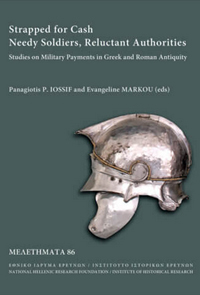
Strapped for Cash: Needy Soldiers, Reluctant Authorities
Studies on Military Payments in Greek and Roman Antiquity
Edited by: Panagiotis P. Iossif, Evangeline Markou
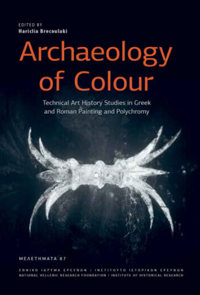
Archaeology of Colour
Technical Art History Studies in Greek and Roman Painting and Polychromy
Edited by: Hariclia Brecoulaki
Lina G. Mendoni and Sophia B. Zoumbaki
ΑΝΤΙΔΩΡΟΝ: La monnaie grecque entre guerre et commerce
Mélanges de numismatique, d’épigraphie et d’histoire offerts à Olivier Picard
Edited by: Εvangéline Markou, Sélénè E. Psôma
Selene E. Psoma
Sikyon I: The Urban Survey
Volume I: Text, Volume II: General Bibliography, Figures and Plates
Edited by: Yannis A. Lolos
Press Releases
The National Hellenic Research Foundation (NHRF) announces that two major research projects of the Institute of Historical Research, have received grants by the General Secretariat for the Aegean and Island Policy for the year 2026. These projects are “Underwater Archaeological Research in Kasos and Karpathos” and “Defining Ancient Coastlines in Kimolos and Melos”.
The National Hellenic Research Foundation (NHRF) announces that two major research projects of the Institute of Historical Research, have received grants by the General Secretariat for the Aegean and Island Policy for the year 2026. These projects are “Underwater Archaeological Research in Kasos and Karpathos” and “Defining Ancient Coastlines in Kimolos and Melos”.
The AmphiPoly research project aims to scientifically document the reconstruction of the monument’s original appearance, including its polychromy and iconography, in all its chronological phases. Digital, three-dimensional representation and aesthetic restoration is implemented, based on archaeometric measurements, digital tools, and historical-archaeological research.
The AmphiPoly research project aims to scientifically document the reconstruction of the monument’s original appearance, including its polychromy and iconography, in all its chronological phases. Digital, three-dimensional representation and aesthetic restoration is implemented, based on archaeometric measurements, digital tools, and historical-archaeological research.
Φωτογραφία κορυφής: Funerary painted stele from ancient Aigai (modern-day Vergina), Macedonia, erected by Amadokos for his three sons, Lysanias, Paramonos and Nikostratos. Polycentric Museum of Aigai ΒΛ 1786. / © Ephorate of Antiquities of Emathia