
Search
CLOSEKasos–Karpathos: New Archaeological Data from the Sea of the Southeastern Aegean
Systematic underwater archaeological research in Greece is among the most demanding and expensive fields of scientific activity, particularly when conducted in remote island regions where access is limited, and infrastructure is minimal or entirely absent. The implementation of such missions requires substantial financial resources, highly specialised personnel, and complex operational planning.
The recent announcement by the Ministry of Culture regarding research coordinated by the Institute of Historical Research of the National Hellenic Research Foundation in the Kasos–Karpathos region, confirms both the scientific importance of the area and the need to continue and support research in an environment with increased logistical demands.
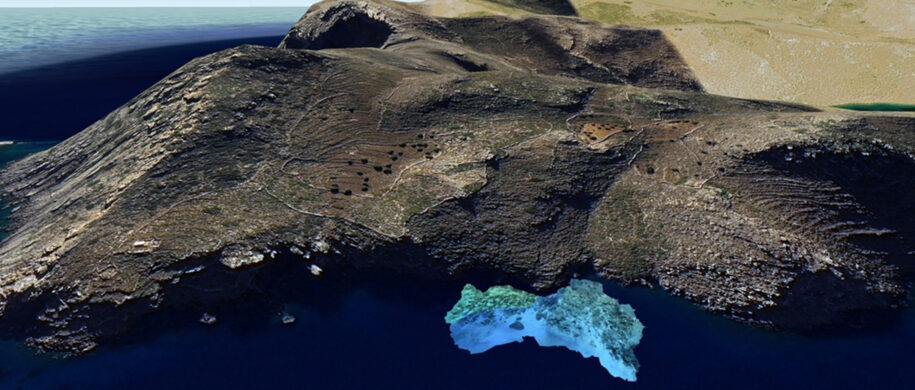
The survey focuses on a significant maritime zone of the southeastern Aegean: the passage between Crete, Karpathos, Kasos, and Rhodes, which served diachronically as a principal gateway to the Archipelago and a strategic hub for navigation, trade, and communication between the Aegean and the Eastern Mediterranean.
The first systematic research mission in Karpathos brought together more than forty scientists and technicians from Greece and abroad, including archaeological researchers from Mexico and Norway, under the direction of the maritime archaeologist Xanthie Argiris and the scientific co-ordination of Charikleia Papageorgiadou, Emeritus Research Director of the Institute of Historical Research / National Hellenic Research Foundation.
The mission lasted more than three weeks of continuous, intensive field operations, involving dozens of daily dives, recording and documenting finds, and constant on-site data processing. Approximately thirty kilometres of coastline were systematically investigated, leading to the discovery of five ancient and modern shipwrecks, numerous Byzantine anchors, and a significant number of isolated finds, including transport amphorae.
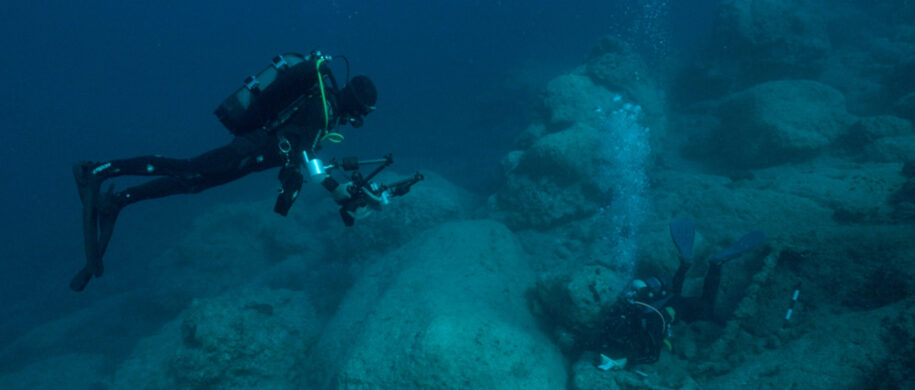
The operational base for the first mission was established at the isolated bay of Tristomo, at the northernmost point of the island, an area of exceptional archaeological wealth, but lacking basic infrastructure, energy supply, and land access. Under conditions of complete operational autonomy and isolation, a living and working base was organised for the research team and support staff. The transport of equipment, supplies, and personnel was carried out exclusively by sea, while the scientific processing of data and the coordination of the mission were supported through satellite communications and specialized technical infrastructure.
Research was funded by the General Secretariat for the Aegean and Island Policy, the National Hellenic Research Foundation, the Institute of Historical Research, TERNA Energy, the Baltic Exchange Charitable Foundation, and the companies Revoil and Sklavenitis.
Valuable support in services, personnel, and technological equipment was provided by: Asso.subsea, the Natural Environment and Climate Change Agency, the Municipality of Karpathos, the Municipality of the Heroic Island of Kasos, the National Institute of Anthropology and History of Mexico, the Norwegian Maritime Museum, Blue Star Ferries, Qualco Foundation, MAP, Apnea, Karpathos Diving Center, Giorgos Venieris, Trata (Konva), Carraro 1927, and Trip Tailors.
Further research in 2026, focused on continued investigation of the Kasos–Karpathos maritime zone and the strengthening of international collaboration, depends on securing the necessary resources to support a complex and demanding field mission. The experience of this year’s expedition highlights both the potential and the growing needs of an undertaking that combines scientific research, technical infrastructure, and operational autonomy under challenging conditions.