Search
CLOSENews
Here you can find information about current events, other research or educative activities of the Section of Byzantine Research.
Newsroom
Διοργάνωση: Τομέας Βυζαντινών Ερευνών (ΤΒΕ/ΙΙΕ)
November 04, 2025 - May 28, 2026
Online
Στην έκδοση, που αποτελεί τον δεύτερο τόμο του σχετικού ευρύτερου έργου, παρουσιάζονται τα εφυαλωμένα αγγεία (τα bacini) που είναι εντοιχισμένα στις όψεις πολυάριθμων ναών της περιφερειακής ενότητας Λασιθίου. Τα αγγεία εντοπίστηκαν στο πλαίσιο του ερευνητικού προγράμματος: «Εντοιχισμένα αγγεία σε βυζαντινές και μεταβυζαντινές εκκλησίες του ελληνικού χώρου: ένα ηλεκτρονικό corpus».
The National Hellenic Research Foundation (NHRF) announces the receipt of a grant for the research project Byzantine and Latin-dominated Tenos: Old and new archaeological data of the Institute of Historical Research, funded by the General Secretariat of the Aegean and Island Policy for 2026.
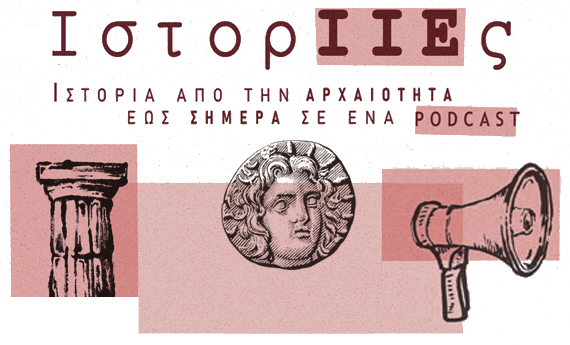
In this podcast, Nikos Tsivikis, Associate Researcher in the Institute of Historical Research, talks about the city of Messene during the period of Late Antiquity, that is in the period between the 3rd and 7th century CE. Was Messene one of the biggest cities in the Peloponnese? What was the relationship between the Messenian elite and Roman administration? What was the impact of the great earthquake of July 365 on the city and its inhabitants? What happens with the coming of Christianity? Can we witness a period of decline during the 5th and 6th centuries? What was the everyday life of the inhabitants? What happens when the Slavs come to the area in the 7th century?
Νοοτροπίες, συναισθήματα και δίκτυα επικοινωνίας ουμανιστών και καλλιτεχνών στο Βυζάντιο και στην Ιταλία την περίοδο της «Αναγέννησης» (13ος-16ος αι.)
February 18 – June 03, 2026
On Wednesdays, 16.00-18.00
University of Athens Historical Archive
News Feed
Στην έκδοση, που αποτελεί τον δεύτερο τόμο του σχετικού ευρύτερου έργου, παρουσιάζονται τα εφυαλωμένα αγγεία (τα bacini) που είναι εντοιχισμένα στις όψεις πολυάριθμων ναών της περιφερειακής ενότητας Λασιθίου. Τα αγγεία εντοπίστηκαν στο πλαίσιο του ερευνητικού προγράμματος: «Εντοιχισμένα αγγεία σε βυζαντινές και μεταβυζαντινές εκκλησίες του ελληνικού χώρου: ένα ηλεκτρονικό corpus».
The National Hellenic Research Foundation (NHRF) announces the receipt of a grant for the research project Byzantine and Latin-dominated Tenos: Old and new archaeological data of the Institute of Historical Research, funded by the General Secretariat of the Aegean and Island Policy for 2026.
In this podcast, Nikos Tsivikis, Associate Researcher in the Institute of Historical Research, talks about the city of Messene during the period of Late Antiquity, that is in the period between the 3rd and 7th century CE. Was Messene one of the biggest cities in the Peloponnese? What was the relationship between the Messenian elite and Roman administration? What was the impact of the great earthquake of July 365 on the city and its inhabitants? What happens with the coming of Christianity? Can we witness a period of decline during the 5th and 6th centuries? What was the everyday life of the inhabitants? What happens when the Slavs come to the area in the 7th century?
Maritime Crossroads: Early Christianity and the Sea Routes of the Southwestern Peloponnese
Nikolaos Tsivikis, Section of Byzantine Research, IHR | NHRF
Early Christianity in Greece (ECG) Conference
March 12, 2026
13:30
Academy of Athens
The event “Reconstructing Premodern Recipes” is dedicated to the study and reconstruction of premodern recipes, primarily from the Greek alchemical and medical traditions.
March 31, 2026
Events Hall, Section of Pharmacognosy & Chemistry of Natural Products (Museum), Department of Pharmacy
Νοοτροπίες, συναισθήματα και δίκτυα επικοινωνίας ουμανιστών και καλλιτεχνών στο Βυζάντιο και στην Ιταλία την περίοδο της «Αναγέννησης» (13ος-16ος αι.)
February 18 – June 03, 2026
On Wednesdays, 16.00-18.00
University of Athens Historical Archive
Lecture Series in Byzantine History, literature, art and archaeology
Organised by: Kostis Smyrlis, Marina Koumanoudi and Stratis Papaioannou
Institute of Historical Research, NHRF
February 16 - June 22, 2026
18:00
Princeton Athens Center
Ψηφιακή Ενσυναίσθηση; ΤΝ και η Νέα Συναισθηματική Συνθήκη
Niki Tsironi, Institute of Historical Research [IHR | NHRF]
Colloquium “Πέρα από τον Αλγόριθμο: ΤΝ, Προσωπικότητα, Έρευνα, Συναίσθημα και Τέχνη”
January 17, 2026
Hellenic Society for the Environment and Culture, 28, Tripodon Str., 10558 Plaka
The Garden of the Virgin: Mount Athos between the Byzantines and the Ottomans
Nikos Livanos, Institute for Historical Research [IHR | NHRF]
The Agora – Institute for Historical Research Seminars 2025-2026
January 17, 2026
19:00 EET
Online
Επιστημονική γνώση, ρητορική και διαχείριση πόρων: περιβαλλοντική τεχνογνωσία στην ύστερη βυζαντινή επιστολογραφία (13ος–15ος αι.)
Kalliope Mavrommati, Section of Byzantine Research, IHR | NHRF
1st Panhellenic Conference on Environmental History, December 12-14, 2025
December 13, 2025
11:45
Department of History and Philosophy of Science, NKUA
Trade priviliges and agreements around the time of Basil II
Maria Gerolymatou, Section of Byzantine Research, IHR | NHRF
Hybrid International Conference: BASIL II AND HIS AGE (976-1025): Material Culture, Art and Architecture (on the Occasion of the completion of 1000 years from his death), 13-15 December 2025
December 13, 2025
11:10
Archeological Museum of Thessaloniki
Maria Gerolymatou, Section of Byzantine Research, IHR | NHRF
Conference “Researching Greek Micronesia”
December 19, 2025
11:50
National Historical Museum (Old Parliament Building), Kolokotronis Square, Stadiou 13, Athens
Medieval Epiros and Albania: Geopolitical and Εconomic Reflections in the Light of Coinage
Lecturer
Julian Baker, Ashmolean Museum, University of Oxford
December 08, 2025
18:00
Princeton Athens Center (3 Timarchou street, 116 34 Athens)
Maria Leontsini, Section of Byzantine Research, IHR | NHRF
1st Panhellenic Conference on Environmental History, December 12-14 2025
December 13, 2025
12:00
Department of History and Philosophy of Science, NKUA
Nikos Livanos, Section of Byzantine Research, IHR | NHRF
New Considerations at the Crossroads between Byzantine and Modern Greek Studies – History & Society
December 19, 2025
16:00
Munich, Ludwig-Maximilians-Universität München
Διοργάνωση: Τομέας Βυζαντινών Ερευνών (ΤΒΕ/ΙΙΕ)
November 04, 2025 - May 28, 2026
Online
The Encounter with Islam in Eastern Christian Legal Traditions: Introducing the NOMOS Project
Speaker
Zachary Chitwood, Ludwig-Maximilians-Universität München
November 24, 2025
18:00
Princeton Athens Center (3 Timarchou street, 116 34 Athens)
The project The “Greek-speaking” Merchants of Constantinople, the Southern Balkans, Asia Minor, and the Islands aims to record and utilize information concerning the activities of “Greek-speaking” merchants within this geographical area.
Raw Materials, Natural Resources and Agricultural Products
The digital database contains information on the Peloponnese concerning raw materials (soil, subsoil), natural resources (forest products, fishery products, rocks), and agricultural produce (farming, livestock) from Late Antiquity to the Late Byzantine period, that is, from the 4th to the 15th century.
The database includes iconographic material focusing on depictions of the codex in mosaics, frescoes, panel paintings, illuminated manuscripts, and works of minor arts. Its purpose is to document and analyze the iconographic conventions used in portraying the codex — which, in most cases, represents the Gospel Book.
The churches built during the Byzantine period are the ones still standing today in the historic center of Athens and beyond. Many of these churches are featured on the website “Byzantine Monuments of Attica”. Alongside the churches, a selection of frescoes, sculptures, mosaics, inscriptions, as well as rare and unpublished material from the British School at Athens (drawings and photographs by 19th-century British architects) are presented here to encourage on-site visits.
The project highlights the imported categories of pottery found in sites in the Peloponnese and in Crete and the fluctuations in the distribution and circulation of ceramic products depending to each period, from the 4th to the 15th or 16th c., respectively. The database contains more than 5800 records and is accompanied by a digital map.
In the ever-growing scholarly interest in studying aspects of the material culture of past societies, research on ceramics has experienced remarkable growth. The study of glazed vessels immured in churches of various areas of Greece offers an important tool for gaining deeper insight into this rich facet of material culture found throughout the Greek world, as the material itself forms a kind of open-air museum for medieval and post-medieval glazed pottery.
This database includes terms related to bookbinding and to the description of the codex as a physical object. It is organized into sections corresponding to the structure of the book, and each term is accompanied by an explanatory text in Greek and a translation of the term only into English.
The database “Chrysothemis” consists of entries concerning methods of food preparation in Byzantium, mainly of the Byzantine recipes, cooked food called mageiriai. Some of the relevant comments are extended studies investigating food preparation and standard of living over time and making comparisons not only among various social classes, but also among various ethnic and religious groups within and beyond the boundaries of the Byzantine Empire.
Domestic and Wild Fauna in the Greek Space
The research examines the role of domestic animals and wild fauna in everyday life. It aims to approach the subject from geographical, historical, and environmental perspectives, focusing on the collection of data concerning the perception and use of wild animals, the breeding and exploitation of domestic animals and livestock, as well as activities such as fishing, apiculture, and hunting.
The database includes written works classified under the following categories: Lives of Saints, Encomia, Miracles, Homilies, and Unclassified, according to their listing in the Bibliotheca Hagiographica Graeca (=BHG). The texts are entered into the database page by page, exactly as they were published in the original edition.
The “Byzantine History Database” is an ongoing project of the SBR/IHR. It is the result of in-depth scholarly processing of more than one hundred Greek and Latin texts to date and aims to create a significant tool for research and support of the educational process.
The database “Byzantine Documents of the Monastery of St. John the Theologian” forms part of the preparation for a unified catalogue of the Byzantine documents preserved in the Monastery’s Archive. In its current form, it includes Imperial, Official, and Patriarchal documents for which a modern diplomatic edition exists.
The database “Western Religious Orders in the Aegean, the Ionian, and Cyprus (11th–19th centuries)” aims to: (a) map for the first time the extent, density, and diversity of the establishments of Western religious orders in these regions from the 11th century to 1830, the year of Greek independence; and (b) collect and present the essential bibliographical documentation concerning these establishments.
The data have been drawn primarily from the scholarly literature and published sources, as well as from unpublished archival material.
The Gazetteer includes all military conflicts that took place in the Byzantine or former Byzantine territories of the Balkan Peninsula and Asia Minor during the period 1204–1461, in which one of the opposing sides consisted wholly or partly of Byzantines. It is accompanied by an interactive digital atlas.
The database records, in diplomatic transcription, the texts of Greek post-Byzantine documents preserved in the archives of the Athonite monasteries. At this stage, it includes all the documents from the monasteries of Esphigmenou and Stavronikita, as well as selected ones from Pantokrator, Xeropotamou, and Karakallou. The database will gradually be enriched with the complete corpus of documents from the remaining monasteries.
The “Prosopography” offers a treasury of processed historical data in a state of constant reconstruction. It is a powerful analytical tool that includes a catalogue of all the persons mentioned in the sources, constituting a complete and objective record of the past.
The database records the notes found in manuscripts of the Monastery of Patmos that have been published in the catalogues of its collection issued to date and, as a final stage, it aims to develop it into a thesaurus of primary historical evidence from the collections of the monastery, with the addition of historical information in its published documents.
Lecture Series in Byzantine History, literature, art and archaeology
Organised by Kostis Smyrlis, Marina Koumanoudi and Stratis Papaioannou
Institute of Historical Research, NHRF
September 29 - December 08, 2025
18:00
Princeton Athens Center
3 Timarchou street, 116 34 Athens

Athens and Jerusalem in the Middle Ages
Athens and Jerusalem in the Middle Ages
Teresa Shawcross, Princeton University
Series of lectures on Byzantine History, Literature, Art and Archaeology.
Organised by:
Kostis Smyrlis, Marina Koumanoudi and Stratis Papaioannou
Institute of Historical Research, Hellenic Institute of History
June 16, 2025
18:00 EEST
location in english
Princeton Athens Center (Τιμάρχου 3, 11634, Αθήνα) & Διαδικτυακά
Historical Sciences Seminar 2024-2025
Historical Sciences Seminar 2024-2025
Organised by: Institute of Historical Research, NHRF | Section of Byzantine Research
May 2025
“Why Such a Rare Species? The Byzantine Cartularies”
Olivier Delouis, Centre National de la Recherche Scientifique
Byzantine Studies Lectures, Spring 2025.
Series of lectures on Byzantine History, Literature, Art and Archaeology.
Organised by:
Kostis Smyrlis, Marina Koumanoudi and Stratis Papaioannou
Institute of Historical Research, Hellenic Institute of History
March 17, 2025
18:00 EET
Princeton Athens Center
(3 Timarchou srt., 11634 Athens)
& Online
Consumer Goods and Consumers in the Aegean Islands during the Early Middle Ages
Salvatore Cosentino, University of Bologna
Byzantine Studies Lectures, Spring 2025
Series of lectures on Byzantine History, Literature, Art and Archaeology
Organised by:
Kostis Smyrlis, Marina Koumanoudi and Stratis Papaioannou
Institute of Historical Research, Hellenic Institute of History
May 19, 2025
18:00 EEST
Princeton Athens Center (Τιμάρχου 3, 11634, Αθήνα) & Διαδικτυακά
Οι βυζαντινές σπουδές από τον 19ο στον 20ό αιώνα: ιδεολογικά ρεύματα, μεθοδολογικά εργαλεία και οι πολλαπλές κατασκευές του Βυζαντίου
Οι βυζαντινές σπουδές από τον 19ο στον 20ό αιώνα: ιδεολογικά ρεύματα, μεθοδολογικά εργαλεία και οι πολλαπλές κατασκευές του Βυζαντίου
Organised by: The Department of History and Archaeology of the National and Kapodistrian University of Athens and the Institute of Historical Research of the National Hellenic Research Foundation (IHR/NHRF)
Academic Year 2024-2025
February 26 – June 04, 2025
Ιστορικό Αρχείο του Πανεπιστημίου Αθηνών, Σκουφά 45, Αθήνα
“Consumer Goods and Consumers in the Aegean Islands during the Early Middle Ages”
Salvatore Cosentino, University of Bologna
18:00 EEST // Princeton Athens Center (Τιμάρχου 3, 11634, Αθήνα) & Διαδικτυακά
May 19, 2025
18:00
Princeton Athens Center (Τιμάρχου 3, 11634, Αθήνα) & Διαδικτυακά
Ημερομηνία ανάρτησης: December 19, 2024
Καταληκτική ημερομηνία υποβολής υποψηφιοτήτων: February 20, 2025, 23:59
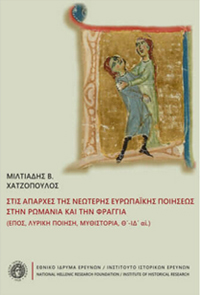
At the Sources of European Poetry in Roman and in Frankish Lands
Miltiades B. Hatzopoulos
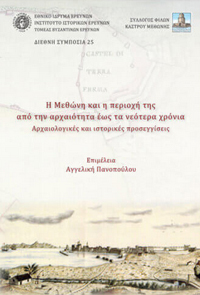
Methoni and its Region from Antiquity to Modern Times: Archaeological and Historical Approaches
Edited by: Angeliki Panopoulou
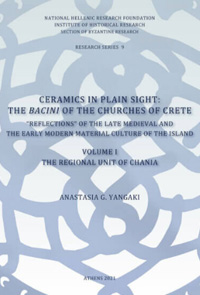
Ceramics in plain sight: The bacini of the churches of Crete
Anastasia G. Yangaki
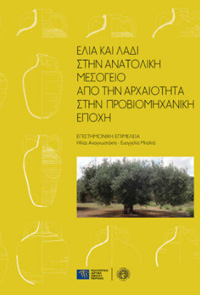
Edited by: Ilias Anagnostakis, Evangelia Balta